
The Future Is a Queryable Ocean
How connected ocean data is becoming infrastructure for decision-making
Every major leap in enterprise productivity has followed a similar pattern.
Spreadsheets made business information usable. Cloud platforms made enterprise data connected. AI is now making large bodies of information easier to search, analyze, and act on.
Ocean data is entering the same transition.
For decades, ocean information was difficult to collect, expensive to manage, and hard to use across teams. A survey produced a deliverable. A project generated a report. Data moved into specialized software, local folders, archives, or systems that only a small number of experts could access, assuming they could find it.
That model met baseline needs when ocean data was scarce.
That model is now breaking under the weight of autonomous systems, advanced sensors, satellite communications, cloud platforms, and AI-driven analysis.
More ocean data is being collected than ever before. Autonomous underwater vehicles, uncrewed surface vessels, hydrographic surveys, sonar systems, environmental sensors, and third-party data sources are creating a growing body of information about the seabed and water column.
The new challenge is making that information operational.
This inflection point demands ocean data infrastructure.
Terradepth is building the Ocean Operating System™ to help organizations collect, connect, visualize, share, and operationalize ocean data at scale. At the core of that system is Absolute Ocean®, Terradepth’s cloud-based platform for bringing ocean data into a unified, source-agnostic geospatial ecosystem.
Absolute Ocean allows teams to integrate and use data from autonomous systems, hydrographic surveys, bathymetry, sonar, environmental observations, historical archives, sensors, and third-party sources.
The goal is simple: turn disconnected ocean information into a persistent operational picture.
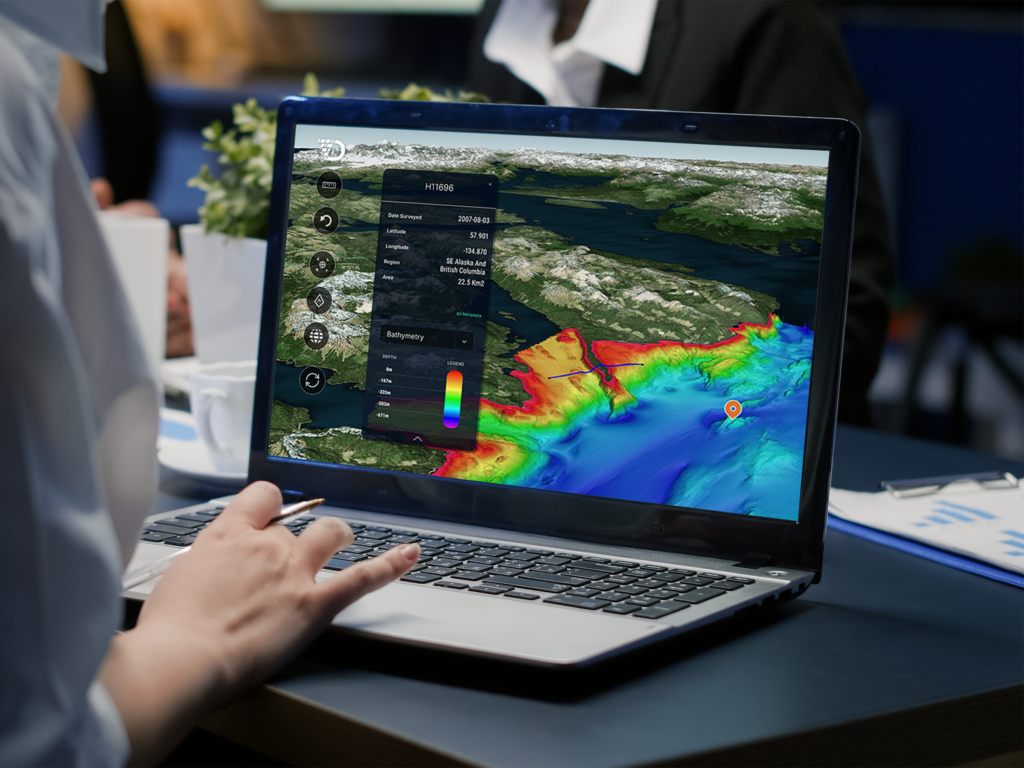
From static deliverables to persistent ocean knowledge
Most organizations that operate in the ocean already have data.
They have survey data. Inspection data. Bathymetry. Imagery. Environmental records. Infrastructure maps. Engineering files. Historical reports. Sensor feeds. Third-party datasets.
The problem is timely access.
Too much of this information lives in formats, folders, platforms, and workflows that make it difficult to compare, search, share, or reuse. A dataset collected for one project can lose value once the immediate deliverable is complete. A survey that should inform future planning may become another static file. A critical insight may remain trapped in a report that never becomes part of an operational workflow.
That is the gap Terradepth’s Ocean Operating System is designed to close.
With Absolute Ocean, organizations can rapidly integrate ocean data in a shared geospatial environment where teams can visualize current conditions, compare them against historical data, collaborate across groups, and maintain a persistent record of ocean knowledge over time.
This changes how ocean data creates value.
A survey evolves from a finite report into a component of a living data environment. Inspection outputs compound beyond compliance to form the basis for critical asset history. A collection mission moves from a point-in-time event to a vital contribution to long-term operational awareness.
The spreadsheet effect for the ocean
Spreadsheets changed business information by making it accessible enough to become part of everyday decision-making.
That accessibility changed how organizations operated.
Finance teams, operations teams, sales teams, executives, analysts, and managers could work from the same information. The spreadsheet became part of the operating fabric of modern business.
Ocean data is approaching a similar moment.
The ocean economy, offshore energy, maritime infrastructure, defense, ports, cables, climate resilience, and subsea asset management all depend on better knowledge of the ocean. Yet many organizations still treat ocean data as a project output rather than an enterprise asset.
That is beginning to change.
As autonomous systems reduce the cost and complexity of collection, the value increasingly shifts to the data layer. The organizations that benefit most will be the ones that can make ocean information accessible, connected, secure, and useful across workflows.
The winners will be the organizations that can make the ocean queryable.
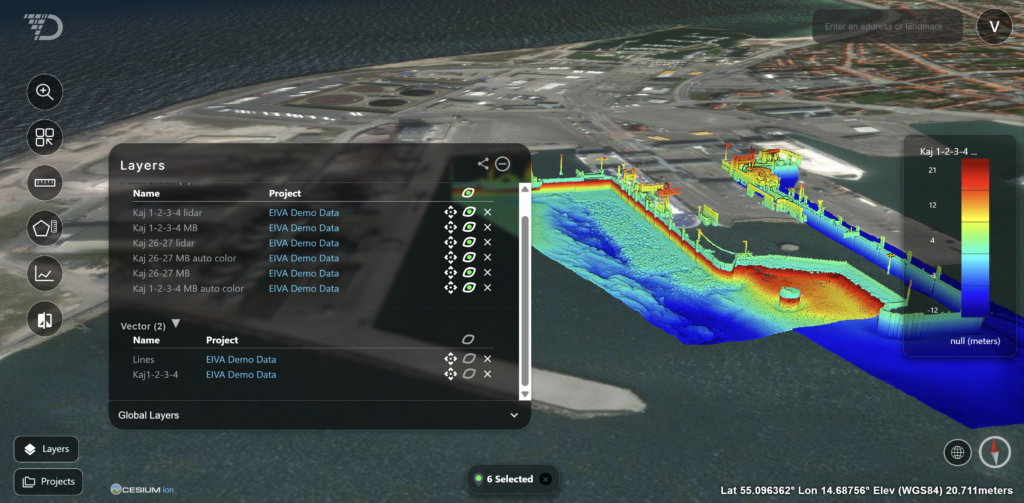
Multilayer Data of Port in Absolute Ocean
Why AI makes this urgent
AI increases the value of connected ocean data.
Large language models, machine learning systems, predictive analytics, automated processing, and digital twins all depend on access to trusted, structured, and usable information. AI tools cannot create durable operational value from data they cannot reach, compare, validate, or understand.
That makes data infrastructure the foundation.
Before organizations can use AI to answer complex ocean questions, they need data environments that connect relevant sources, preserve context, support collaboration, and make information searchable across time and geography.
This is especially important in the ocean, where data is expensive to collect and often difficult to replicate. Every survey, sensor feed, inspection, and autonomous mission should become part of a larger knowledge base.
AI will make ocean data more useful. Connected ocean data platforms make that possible.
The queryable ocean
The future of ocean operations will be defined by the ability to ask better questions and get trusted answers faster.
Where have seabed conditions changed?
What assets are exposed to risk?
How does a current survey compare with historical data?
Where should we inspect next?
What infrastructure needs attention?
What environmental conditions matter for this operation?
Which datasets support this decision?
These questions require more than collection. They require a connected data environment that turns ocean information into operational knowledge.
That is the purpose of Terradepth’s Ocean Operating System and Absolute Ocean.
The ocean is becoming a data environment. The organizations that can access, connect, and operationalize that data will make faster decisions, reduce risk, and create new value from information they may already possess.
The future is a queryable ocean.
Terradepth is building the infrastructure to make it usable.
Ready to see what connected ocean data can do?
Terradepth’s Ocean Operating System™ and Absolute Ocean® help organizations collect, connect, visualize, share, and operationalize ocean data from autonomous systems, hydrographic surveys, sensors, historical archives, and third-party sources.
Whether your data lives on a vessel, in the cloud, or across multiple teams and systems, Absolute Ocean helps transform disconnected ocean information into a shared operational picture.
Request a demo to see how connected ocean data can support the next evolution of your operations.